
.png)





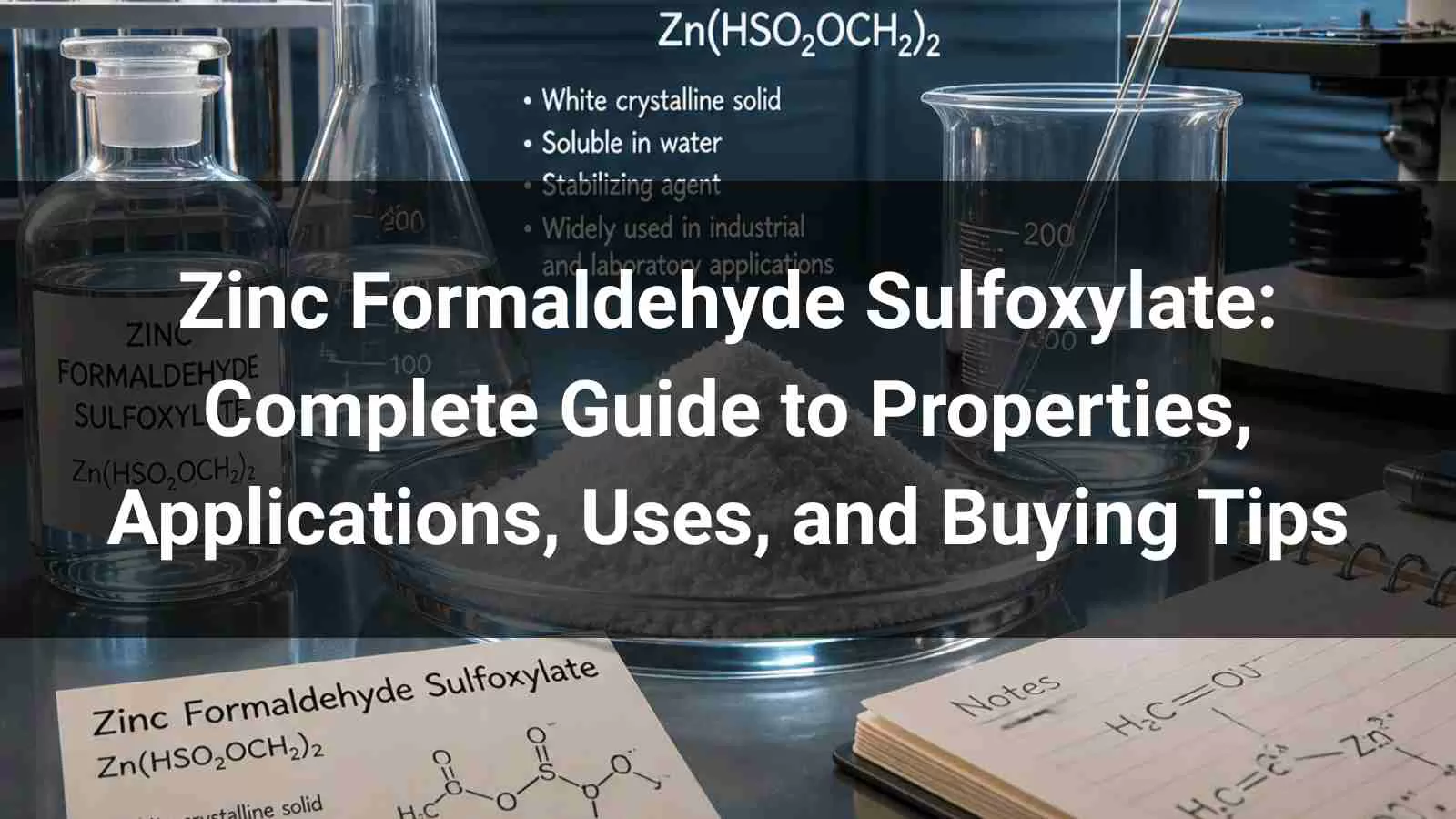
In modern industrial manufacturing, selecting the right chemical reducing agent plays an important role in improving production efficiency, maintaining product quality, and achieving consistent processing results. Among various reducing chemicals available today, zinc formaldehyde sulfoxylate (ZFS) has become a widely used specialty chemical, particularly in textile processing, dyeing auxiliaries, printing applications, and other industrial chemical processes.
Known for its strong reducing capability, good stability, and effective performance in demanding applications, zinc formaldehyde sulfoxylate is valued by manufacturers that require reliable chemical performance and controlled reduction reactions.
For companies involved in textile manufacturing, chemical distribution, and industrial processing, understanding the properties, applications, advantages, and purchasing considerations of zinc formaldehyde sulfoxylate is essential before selecting a suitable supplier.
This complete guide explains everything buyers need to know about zinc formaldehyde sulfoxylate, including its chemical characteristics, industrial uses, comparison with alternative reducing agents, storage requirements, and how to choose a reliable zinc formaldehyde sulfoxylate manufacturer.
| Table of Contents | |
|---|---|
| 1 | |
| 2 | |
| 3 | |
| 4 | |
| 5 | |
| 6 | |
| 7 | |
| 8 | |
| 9 | |
| 10 | |
| 11 | |
Zinc formaldehyde sulfoxylate (ZFS) is an inorganic-organic zinc salt that functions as a powerful reducing agent in various industrial applications. It is also known as zinc sulfoxylate formaldehyde and belongs to the family of formaldehyde sulfoxylate compounds.
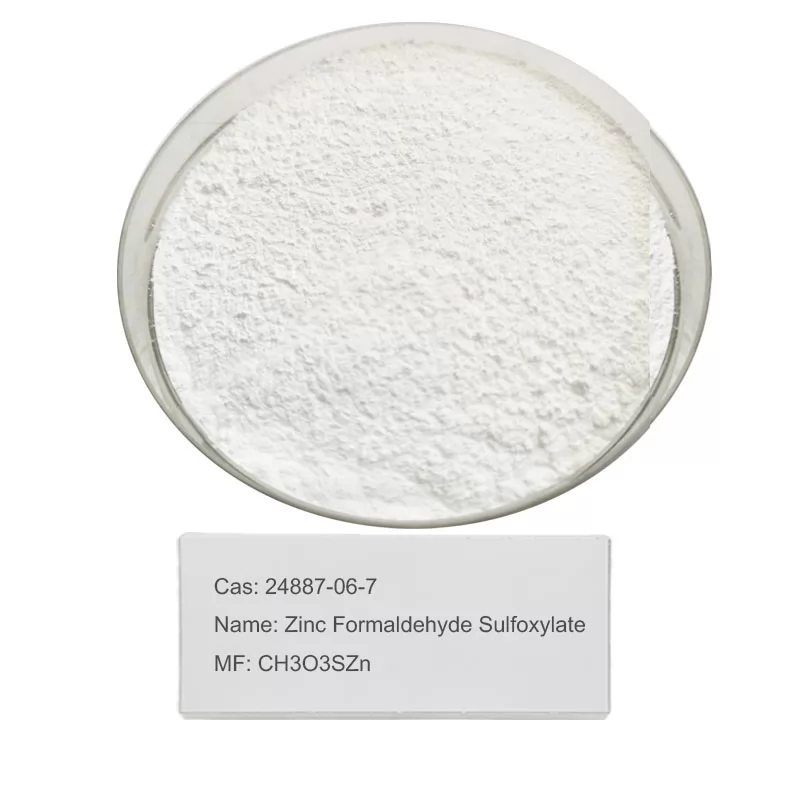
The chemical is generally supplied in the form of a white crystalline powder with excellent water solubility and stable reducing properties under suitable storage conditions.
Because of its strong reduction ability, zinc formaldehyde sulfoxylate is widely applied in industries where controlled reduction reactions are required, especially in:
Unlike many traditional reducing agents, ZFS provides manufacturers with a combination of effective reduction performance and relatively convenient handling characteristics.
| Property | Description |
|---|---|
| Chemical Name | Zinc Formaldehyde Sulfoxylate |
| Abbreviation | ZFS |
| CAS Number | 24887-06-7 |
| Appearance | White crystalline powder |
| Solubility | Soluble in water |
| Main Function | Reducing agent |
| Primary Industries | Textile, dyeing, chemical processing |
For industrial buyers, understanding these basic characteristics helps determine whether zinc formaldehyde sulfoxylate is suitable for a specific manufacturing process.
The effectiveness of zinc formaldehyde sulfoxylate comes from its chemical structure and ability to participate in reduction reactions.
As a reducing agent, ZFS can provide reducing components that react with oxidized substances and convert them into reduced forms. This property makes it particularly valuable in processes where oxidation control and color modification are required.
1. Appearance
Commercial zinc formaldehyde sulfoxylate is normally supplied as a fine white powder or crystalline material.
A high-quality product should have:
These factors influence dissolution speed and processing consistency.
2. Water Solubility
Zinc formaldehyde sulfoxylate has good solubility in water, allowing manufacturers to prepare solutions efficiently for industrial applications.
Good solubility provides several benefits:
For textile and dyeing industries, this characteristic is especially important because uneven chemical dispersion can negatively affect final product quality.
3. Reducing Capability
The most important property of zinc formaldehyde sulfoxylate is its strong reducing ability.
During industrial processing, ZFS can donate reducing components that help:
This makes it an effective alternative to some traditional reducing agents in specific applications.
To understand why zinc formaldehyde sulfoxylate is widely used, it is important to understand its working mechanism.
A reducing agent works by donating electrons during a chemical reaction. These electrons allow another substance to undergo reduction.
The general process can be explained as:
Zinc Formaldehyde Sulfoxylate → Reducing Components → Electron Transfer → Reduction Reaction
In industrial applications, this reaction mechanism enables ZFS to influence:
In textile processing, many dyes require specific chemical environments to achieve the desired color effect. Oxidation reactions may cause unwanted color changes or reduce processing accuracy.
Zinc formaldehyde sulfoxylate helps manufacturers control these reactions by providing a stable reducing environment.
Typical benefits include:
For textile producers, this means improved production reliability and fewer quality issues.
Because of its excellent reducing performance and chemical stability, zinc formaldehyde sulfoxylate (ZFS) has become an important specialty chemical used in multiple industrial fields. Among all applications, textile processing and dyeing remain the largest and most recognized markets.
For industrial buyers, understanding the practical applications of zinc formaldehyde sulfoxylate helps determine whether this chemical is suitable for their production requirements.
The textile industry is one of the most important application areas for zinc formaldehyde sulfoxylate.
During textile production, manufacturers often need reducing agents to control dye reactions, improve color effects, and achieve specific printing results. ZFS provides effective reduction performance, making it suitable for various dyeing and printing processes.
Discharge Printing
One of the major uses of zinc formaldehyde sulfoxylate is in discharge printing.
Discharge printing is a textile printing technique where color is selectively removed from dyed fabrics to create patterns or designs. A reducing agent is required to break down dye molecules without damaging the fabric structure.
Zinc formaldehyde sulfoxylate helps:
Compared with some traditional reducing agents, ZFS can provide stable performance during controlled discharge processes.
Dye Reduction Processes
Many textile dyes require reduction before they can properly interact with textile fibers.
Zinc formaldehyde sulfoxylate can support dye reduction by creating a suitable chemical environment, improving:
This makes it valuable for textile manufacturers producing high-quality fabrics where color accuracy is critical.
Another important application of zinc formaldehyde sulfoxylate is industrial bleaching and color correction.
In some manufacturing processes, unwanted colors or oxidized compounds need to be reduced or removed. ZFS provides a controlled reducing effect that can help manufacturers achieve the desired appearance.
Applications may include:
The advantage of using a specialized reducing agent like ZFS is that manufacturers can achieve more predictable results compared with less controlled chemical methods.
Beyond textile applications, zinc formaldehyde sulfoxylate is also used in certain chemical manufacturing processes where reduction reactions are required.
Its reducing properties make it useful in:
For chemical manufacturers, selecting a suitable reducing agent is essential because reaction efficiency and product quality often depend on chemical stability and performance.
Some polymer-related processes require reducing conditions to control chemical reactions or improve material characteristics.
Zinc formaldehyde sulfoxylate may be considered in specific polymer and material processing applications because of its:
The exact application depends on formulation requirements, processing conditions, and technical specifications.
For manufacturers evaluating different reducing agents, zinc formaldehyde sulfoxylate offers several advantages.
1. Strong and Reliable Reducing Performance
The primary advantage of ZFS is its effective reduction capability.
A reliable reducing agent should provide:
High-quality zinc formaldehyde sulfoxylate helps manufacturers maintain stable production processes and reduce quality fluctuations.
2. Excellent Water Solubility
Water solubility is an important factor for industrial chemicals, especially in textile and dyeing applications.
Good solubility allows:
For large-scale production facilities, these advantages can improve operational efficiency.
3. Suitable for Sensitive Industrial Processes
Some production processes require precise chemical control. Excessively strong or unstable reducing agents may create unwanted side reactions.
Zinc formaldehyde sulfoxylate provides a balanced reduction effect, making it suitable for applications requiring controlled chemical reactions.
4. Improved Processing Consistency
For industrial buyers, consistency is often more important than simply purchasing the lowest-cost chemical.
A dependable ZFS supplier should provide:
These factors directly influence production efficiency and final product quality.
5. Convenient Storage and Transportation
Compared with some highly reactive reducing agents, zinc formaldehyde sulfoxylate has relatively convenient handling characteristics when properly packaged and stored.
Manufacturers can benefit from:
However, proper storage conditions remain necessary to maintain product performance.
When purchasing industrial reducing agents, many buyers compare zinc formaldehyde sulfoxylate (ZFS) with sodium hydrosulfite (sodium dithionite).
Both chemicals are widely used reducing agents, but they have different characteristics and application advantages.
Understanding the differences helps buyers select the right product for their specific process.
| Feature | Zinc Formaldehyde Sulfoxylate (ZFS) | Sodium Hydrosulfite |
|---|---|---|
| Chemical Function | Reducing agent | Strong reducing agent |
| Main Applications | Textile, printing, specialty processing | Textile bleaching, dyeing, industrial reduction |
| Stability | Good stability under proper storage | More sensitive to moisture and oxidation |
| Handling | Relatively convenient | Requires careful handling |
| Processing Control | Suitable for controlled reduction | Strong reduction capability |
| Storage Requirements | Dry and sealed storage required | More strict moisture protection needed |
1. Stability
One major consideration for industrial buyers is chemical stability.
Zinc formaldehyde sulfoxylate generally provides good storage stability when maintained under recommended conditions.
Sodium hydrosulfite, while highly effective, can be more sensitive to:
For companies managing long-term inventory, stability can be an important purchasing factor.
2. Application Suitability
The best reducing agent depends on the specific production process.
Zinc formaldehyde sulfoxylate is often preferred for applications requiring:
Sodium hydrosulfite may be preferred for applications requiring stronger immediate reducing power.
Therefore, buyers should evaluate production requirements, processing temperature, and reaction conditions before selecting a product.
3. Supplier Support
Regardless of choosing ZFS or sodium hydrosulfite, supplier capability plays a critical role.
A professional chemical supplier should provide:
Choosing the right supplier is often as important as choosing the chemical itself.
For global buyers, purchasing zinc formaldehyde sulfoxylate is not only about price. Product consistency, manufacturing capability, and technical support are equally important.
A reliable supplier can help ensure stable production performance and reduce supply chain risks.
A reliable supplier should not only provide zinc formaldehyde sulfoxylate but also help customers achieve better application results through quality control, documentation, and industry experience.
When evaluating potential suppliers, buyers should focus on the following key factors.
1. Product Quality and Purity Control
The quality of zinc formaldehyde sulfoxylate directly affects industrial processing performance.
A professional manufacturer should have strict quality control procedures covering:
For industrial applications, inconsistent chemical quality can lead to unstable production results, increased processing costs, product quality problems, and production delays.
Therefore, buyers should always request technical documentation, including Certificate of Analysis (COA), Technical Data Sheet (TDS), and Safety Data Sheet (SDS) before placing bulk orders.
2. Manufacturing Capability and Production Capacity
A reliable zinc formaldehyde sulfoxylate manufacturer should have sufficient production capability to support long-term customer requirements.
Important factors include:
For distributors and large industrial users, supplier stability is especially important because unexpected supply interruptions can affect entire production operations.
A manufacturer with strong production capability can provide consistent product availability, flexible order quantities, and reliable delivery schedules.
3. Technical Support and Application Experience
Chemical purchasing decisions often require more than product delivery.
A professional supplier should understand how zinc formaldehyde sulfoxylate performs in different applications and provide technical assistance when needed.
Technical support may include product selection guidance, application recommendations, processing suggestions, and troubleshooting support.
For textile manufacturers, for example, a supplier with industry experience can help optimize chemical dosage, processing conditions, reduction efficiency, and final fabric quality.
4. Packaging and Export Capability
For international chemical buyers, packaging quality and logistics experience are essential.
Zinc formaldehyde sulfoxylate should be packaged properly to protect the product during transportation and storage.
Common industrial packaging options include:
A professional supplier should also understand international shipping requirements, including export documentation, container loading procedures, and international logistics coordination.
5. Supplier Reputation and Industry Experience
A supplier's industry experience is another important consideration.
Companies with years of experience in specialty chemicals usually have better understanding of market requirements, customer applications, quality expectations, and international standards.
When selecting a zinc formaldehyde sulfoxylate supplier, buyers should evaluate company history, customer industries served, export markets, and product portfolio.
Proper storage and handling are essential to maintain the performance and stability of zinc formaldehyde sulfoxylate.
Although ZFS is considered a stable industrial chemical when properly stored, improper conditions may affect product quality.
For optimal storage performance, zinc formaldehyde sulfoxylate should be kept under the following conditions:
1. Keep in a Dry Environment
Moisture exposure should be minimized because humidity may affect chemical stability and product performance.
2. Avoid Excessive Heat
High temperatures may negatively affect chemical stability.
3. Use Proper Packaging
Original packaging should remain sealed until the product is ready for use.
Proper packaging helps prevent moisture absorption, contamination, and quality degradation.
When handling zinc formaldehyde sulfoxylate, industrial users should follow standard chemical handling procedures.
Recommended practices include:
Each application facility should establish safety procedures based on local regulations and operating conditions.
1. What is zinc formaldehyde sulfoxylate used for?
Zinc formaldehyde sulfoxylate is mainly used as a reducing agent in industrial applications, especially textile dyeing, discharge printing, and specialty chemical processing. Its strong reduction capability makes it suitable for processes requiring controlled chemical reactions.
2. What is the CAS number of zinc formaldehyde sulfoxylate?
The CAS number of zinc formaldehyde sulfoxylate is: CAS No.: 24887-06-7. This identification number is commonly used by chemical buyers, distributors, and manufacturers when sourcing the product.
3. Is zinc formaldehyde sulfoxylate a reducing agent?
Yes. Zinc formaldehyde sulfoxylate is widely recognized as an industrial reducing agent. It works by providing reducing components that participate in chemical reduction reactions. This property makes it useful in textile processing, dye applications, and other industrial processes.
4. What industries use zinc formaldehyde sulfoxylate?
The main industries using zinc formaldehyde sulfoxylate include textile manufacturing, dyeing and printing, chemical processing, and specialty industrial manufacturing. Among these industries, textile applications represent one of the most important markets.
5. How should zinc formaldehyde sulfoxylate be stored?
Zinc formaldehyde sulfoxylate should be stored in a cool, dry environment with sealed packaging. Avoid moisture, excessive heat, and contamination. Following proper storage practices helps maintain product quality during inventory periods.
6. How do I choose a zinc formaldehyde sulfoxylate manufacturer?
When selecting a zinc formaldehyde sulfoxylate manufacturer, buyers should evaluate product quality, manufacturing capability, technical support, export experience, and documentation availability. A reliable supplier should provide consistent products and professional service throughout the cooperation process.
For companies looking for a dependable source of zinc formaldehyde sulfoxylate, choosing an experienced chemical partner is essential.
High Mountain Chem focuses on providing industrial chemical solutions for global customers, offering products that meet the requirements of manufacturers, distributors, and industrial users.
A professional supplier should help customers achieve:
By working with an experienced zinc formaldehyde sulfoxylate supplier, businesses can reduce sourcing risks and improve production consistency.
Zinc formaldehyde sulfoxylate is an important industrial reducing agent widely used in textile dyeing, discharge printing, and specialty chemical applications.
Its advantages, including effective reducing performance, good water solubility, and stable industrial usability, make it a valuable chemical choice for many manufacturing processes.
For buyers, selecting the right product is only part of the decision. Choosing a reliable zinc formaldehyde sulfoxylate manufacturer with strong quality control, production capability, and technical support is equally important.
A complete evaluation of chemical properties, application requirements, supplier capability, storage conditions, and long-term cooperation potential can help companies achieve better production results and establish a more reliable supply chain.
For global manufacturers and distributors searching for a trusted zinc formaldehyde sulfoxylate partner, working with an experienced chemical supplier can provide both product reliability and long-term business value.





.png)




.png)

.png)