Hook: Imagine a single compound that bridges the gap between industrial chemistry and everyday life—enabling everything from food thickeners to herbicides, yet remains invisible to most consumers. Sodium chloroacetate, also widely known as Sodium monochloroacetate and systematically named Monochloroacetic acid sodium salt, is a white crystalline powder with a deceptively simple structure. It is this unsung hero, powering over $1 billion in global markets while posing unique challenges for manufacturers and formulators alike.
I. Sodium Chloroacetate: Fundamental Chemistry & Physical Properties
1.1 Chemical Identification Information
Sodium chloroacetate (SMCA, CAS 3926-62-3, EINECS 223-498-3) is the sodium salt of chloroacetic acid with the molecular formula C₂H₂ClNaO₂ and molar mass 116.48 g/mol. Its systematic name is sodium 2-chloroacetate, and it's classified under HS Code 291540 for international trade. As mentioned above,
Sodium monochloroacetate is the most common shorthand name in overseas markets, while
Monochloroacetic acid sodium salt is its standard chemical nomenclature. The compound exists as a monohydrate or anhydrous form, with the anhydrous variety being more commercially prevalent. For verified chemical data, refer to the
CAS Common Chemistry Database.
1.2 Physical Properties
|
Property |
Value |
Significance |
|
Appearance |
White crystalline powder |
Enables visual quality control |
|
Density |
1.87 g/cm³ (20°C) |
Determines packaging requirements |
|
Melting Point |
199°C (decomposes) |
Critical for thermal processing limits |
|
Solubility |
820 g/L (20°C water), soluble in methanol, insoluble in acetone/benzene |
Dictates reaction medium selection |
|
Flash Point |
270°C |
Indicates low flammability risk |
|
Vapor Pressure |
0.001 Pa (20°C) |
Minimizes inhalation exposure risks |
SMCA exhibits high hygroscopicity, requiring moisture-controlled storage to prevent clumping and degradation. Its crystalline structure contributes to excellent flow properties when properly dried, facilitating automated handling in production facilities.
1.3 Chemical Stability & Reactivity
Dry sodium chloroacetate demonstrates remarkable stability under normal conditions, with a shelf life exceeding 24 months when stored at temperatures below 30°C in sealed containers. However, it undergoes several key reactions:
-
Alkylation Reactions: The chloroacetate group readily undergoes SN2 substitution, making SMCA a versatile carboxymethylating agent for introducing -CH₂COO⁻ functionality.
-
Hydrolysis: In aqueous solutions, especially under alkaline conditions, SMCA slowly hydrolyzes to glycolic acid and sodium chloride. This reaction is temperature-dependent, with a half-life of 72 hours at 25°C and pH 7, decreasing to 4 hours at 80°C.
-
Reduction: Reaction with sodium hydrosulfide yields thioglycolic acid, a critical intermediate for personal care products.
-
Decomposition: At temperatures above 200°C, SMCA decomposes to release toxic hydrogen chloride gas and other chlorinated byproducts, necessitating proper thermal management in manufacturing.
SMCA is incompatible with strong oxidizing agents, amines, and reducing agents, which can trigger violent reactions or decomposition.
II. Synthesis Methods & Industrial Production Technology
2.1 Laboratory Synthesis Routes
Laboratory preparation of sodium chloroacetate follows a straightforward neutralization pathway:
-
Dissolve chloroacetic acid (MCA) in anhydrous ethanol or water (10-20% w/v)
-
Cool the solution to 15-20°C to prevent excessive heat generation
-
Add sodium hydroxide (NaOH) or sodium carbonate (Na₂CO₃) solution incrementally, maintaining pH 6.8-7.0
-
Stir for 30-60 minutes to ensure complete conversion
-
Filter the resulting crystals and wash with cold ethanol to remove impurities
-
Dry at 60-80°C under vacuum to obtain anhydrous SMCA (purity >99%)
For aqueous applications, the reaction can be performed directly in water at 70°C without isolation, yielding a ready-to-use solution. This method achieves >98% conversion efficiency with minimal byproduct formation when carefully controlled.
2.2 Industrial Scale Production
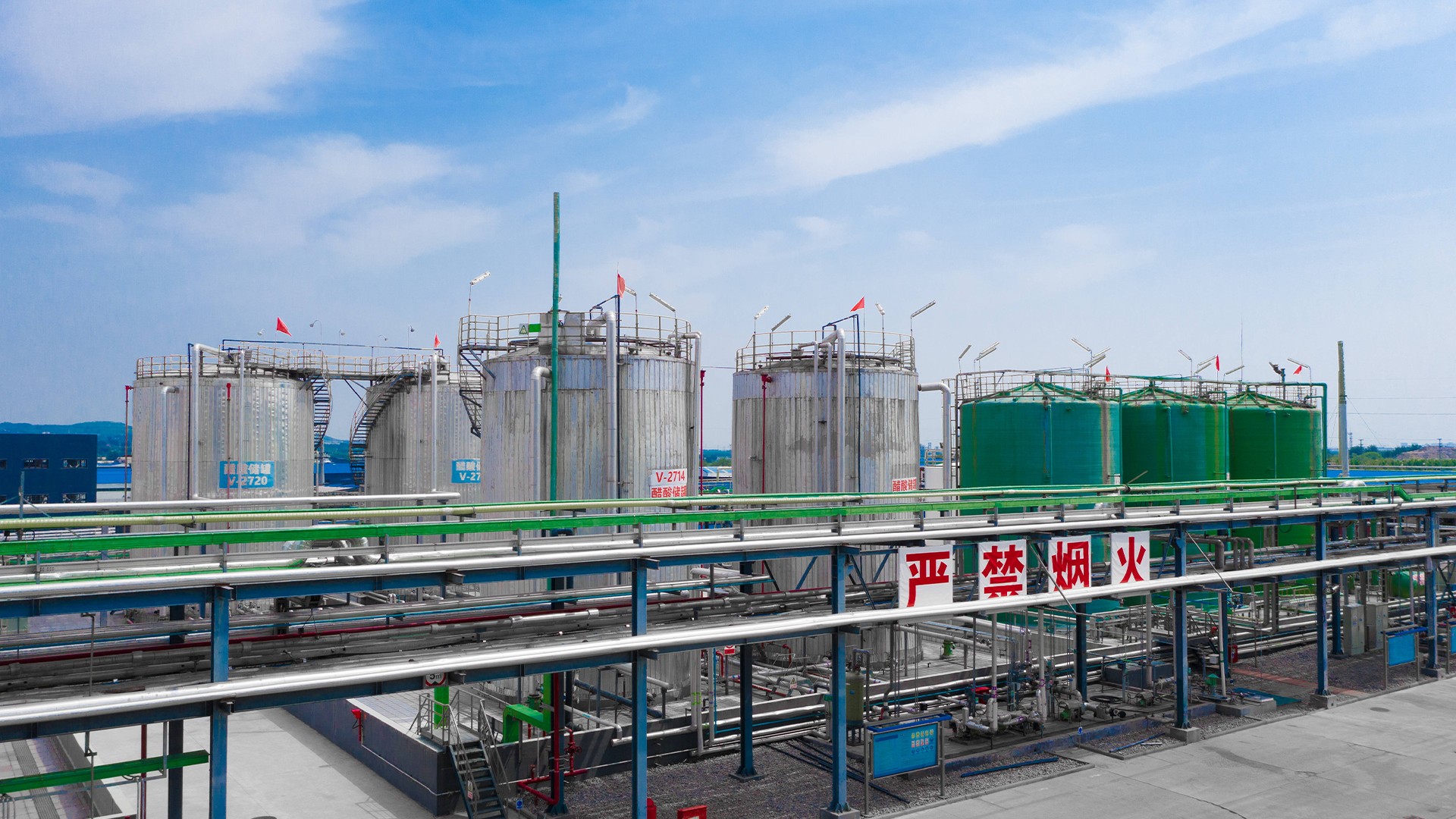
Commercial manufacturing of SMCA employs a continuous or batch process with five key stages:
-
Feed Preparation: MCA (98-99% purity) is dissolved in deionized water to form a 30-40% w/w solution.
-
Neutralization: The MCA solution is pumped into a jacketed reactor where NaOH (50% w/w) is added in stoichiometric proportion (1:1 molar ratio), maintaining 50-70°C and pH 7.0-7.5. Heat of neutralization (ΔH = -56 kJ/mol) is controlled via external cooling.
-
Purification: The reaction mixture undergoes activated carbon treatment to remove color bodies, followed by filtration to eliminate particulates.
-
Concentration & Crystallization: Vacuum evaporation reduces water content to 15-20%, after which the solution is cooled to 20-25°C to induce crystallization. Centrifugation separates the solid from the mother liquor.
-
Drying & Packaging: Crystals are dried in a fluidized bed dryer at 80-90°C to achieve <0.5% moisture content, then packaged in moisture-resistant bags (25 kg) with desiccants.
Modern facilities utilize automated process control systems to maintain product consistency, with typical yields exceeding 95% and energy consumption of 0.8-1.0 MWh per tonne of SMCA produced.
2.3 Quality Standards & Impurity Control
Stringent quality specifications govern SMCA production for different applications. High Mountain Chem supplies three mainstream types: Industrial grade Sodium Chloroacetate, Reagent grade Sodium Chloroacetate and High purity Sodium Chloroacetate, each with tailored indicators for diverse industrial demands.
|
Specification |
Industrial Grade |
Pharmaceutical Grade |
Agricultural Grade |
|
Purity |
≥98.0% |
≥99.5% |
≥97.0% |
|
Free Chloride |
≤0.5% |
≤0.1% |
≤0.8% |
|
Heavy Metals |
≤10 ppm |
≤5 ppm |
≤20 ppm |
|
Water Content |
≤0.5% |
≤0.3% |
≤1.0% |
|
pH (10% solution) |
6.5-7.5 |
6.8-7.2 |
6.0-8.0 |
Key impurities requiring control include unreacted MCA, sodium glycolate from hydrolysis, and sodium chloride from neutralization. Advanced manufacturers implement in-line near-infrared (NIR) spectroscopy for real-time monitoring of purity and impurity levels, reducing quality control costs by 30% while improving batch consistency.
III. Core Applications & Technical Solutions
3.1 Carboxymethyl Cellulose (CMC) Synthesis Application
Sodium chloroacetate serves as the critical carboxymethylating agent in CMC production, a $1.2 billion global market growing at 4.5% CAGR (2024-2030). The industrial process involves:
-
Alkali Activation: Cellulose pulp reacts with 18-20% NaOH solution at 20-30°C to form alkali cellulose
-
Etherification: SMCA (0.8-1.2 molar ratio to cellulose) is added, and the mixture is heated to 60-70°C for 2-3 hours
-
Neutralization & Purification: Excess alkali is neutralized with acetic acid, and the product is washed to remove NaCl and unreacted SMCA
-
Drying & Milling: The resulting CMC is dried to <10% moisture and milled to the desired particle size
SMCA quality directly impacts CMC performance—higher purity reduces byproduct formation, while controlled particle size ensures uniform reaction rates. Leading manufacturers report that using pharmaceutical-grade SMCA improves CMC substitution uniformity by 15%, enhancing product viscosity stability and solubility.
3.2 Agricultural Chemicals Manufacturing Applications
SMCA plays dual roles in agrochemicals: as a direct herbicide and as a key intermediate for synthetic pesticides. For more pesticide raw materials, check our
chemical intermediates supply.
Direct Herbicide Use: SMCA functions as a contact herbicide for non-crop areas (railways, industrial sites) at application rates of 50-100 kg/ha. It inhibits acetyl-CoA carboxylase, blocking fatty acid synthesis and causing weed death within 7-14 days. Formulations with surfactants improve leaf absorption, increasing efficacy by 25% while reducing application rates.
Pesticide Synthesis: As a professional Sodium Chloroacetate for pesticide intermediate, SMCA is essential for manufacturing phenoxy herbicides (MCPA, 2,4-D), insecticides (dimethoate), and plant growth regulators. For example, the synthesis of MCPA involves:
-
SMCA reaction with phenol in alkaline conditions to form phenoxyacetic acid
-
Chlorination to produce MCPA, with an overall yield of 85-90%
3.3 Pharmaceutical & Fine Chemical Applications
In pharmaceuticals, SMCA serves as a versatile intermediate for synthesizing:
-
Amino acids (glycine, serine) via Strecker synthesis
-
Sedatives and hypnotics (barbiturates)
-
Vitamins (B-complex)
-
Adrenaline and other sympathomimetic agents
The compound's carboxymethylation capability is exploited in peptide mapping for protein structure analysis, where it selectively modifies cysteine residues to prevent disulfide bond formation. Pharmaceutical-grade SMCA must meet USP/NF standards, with tight limits on heavy metals (≤5 ppm) and organic impurities (≤0.1%) to ensure patient safety.
3.4 Emerging Application Areas
SMCA is finding innovative uses in multiple new fields:
-
Biotechnology: As a selective agent in microbial culture media, inhibiting unwanted bacterial growth while supporting recombinant protein production.
-
Material Science: For surface modification of nanoparticles and polymers, enhancing biocompatibility and functionalization capabilities.
-
Water Treatment: Our Sodium Chloroacetate for water treatment acts as a corrosion inhibitor in cooling systems, forming protective films on metal surfaces at concentrations of 50-100 ppm. Discuss your water treatment needs with our team via contact page.
-
Personal Care: In the synthesis of amphoteric surfactants (betaines) for mild shampoos and body washes, offering superior foaming properties and skin compatibility compared to traditional anionic surfactants.
IV. Analytical Testing Methods & Quality Control
4.1 Quantitative Analysis Techniques
Accurate SMCA quantification relies on three primary methods:
-
Titration: The official method (AOAC 985.35) uses silver nitrate titration of chloride ions after alkaline hydrolysis, with a precision of ±0.2% and detection limit of 0.1%.
-
HPLC: Reversed-phase HPLC with UV detection (210 nm) separates SMCA from impurities using a C18 column and phosphate buffer mobile phase. This method achieves a detection limit of 1 ppm and quantitation limit of 5 ppm, suitable for trace analysis.
-
NIR Spectroscopy: In-line NIR analysis enables real-time monitoring of SMCA concentration in process streams, with a correlation coefficient (R²) >0.99 and analysis time <1 minute, supporting Industry 4.0 initiatives.
4.2 Impurity Detection Schemes
Critical impurities require specialized detection:
|
Impurity |
Detection Method |
Limit of Detection |
|
Free Chloroacetic Acid |
Ion Chromatography |
0.01% |
|
Sodium Glycolate |
HPLC with Refractive Index Detection |
0.05% |
|
Heavy Metals (Pb, Cd, Hg) |
ICP-MS |
0.1 ppm |
|
Organic Volatiles |
GC-MS |
0.001% |
|
Water Content |
Karl Fischer Titration |
0.01% |
Pharmaceutical applications often require additional tests for residual solvents (ethanol, methanol) and particulate matter to meet regulatory requirements.
4.3 Process Analytical Technology (PAT)
Modern SMCA production facilities implement PAT systems to enhance quality control:
-
In-line pH & Temperature Monitoring: Real-time data prevents off-spec batches, reducing waste by 15-20%.
-
Raman Spectroscopy: Provides molecular-level insights into reaction progress, enabling precise endpoint determination.
-
Particle Size Analysis: Laser diffraction monitors crystal growth during crystallization, ensuring consistent product flow properties.
-
Automated Sampling & Analysis: Reduces human error and provides 24/7 process oversight, improving overall equipment effectiveness (OEE) by 10-15%.
V. Safety, Toxicity & Environmental Impact
5.1 Comprehensive Toxicological Data Analysis
Sodium chloroacetate exhibits moderate to high toxicity across exposure routes:
|
Exposure Route |
Toxicity Data |
Classification |
|
Oral (Rat) |
LD₅₀ = 75 mg/kg |
Acute Toxicity Category 2 (H300) |
|
Dermal (Rabbit) |
LD₅₀ = 200 mg/kg |
Acute Toxicity Category 3 (H311) |
|
Inhalation (Rat) |
LC₅₀ = 1.2 mg/L (4h) |
Acute Toxicity Category 3 (H331) |
|
Skin Irritation |
Severe (rabbit) |
Category 2 (H315) |
|
Eye Irritation |
Corrosive (rabbit) |
Category 1 (H318) |
Chronic exposure studies indicate potential for developmental toxicity (NOAEL = 10 mg/kg/day in rats) and reproductive effects at high doses. SMCA is not classified as carcinogenic, mutagenic, or teratogenic by IARC or EU CLP regulations.
5.2 Safe Handling & Protective Guidelines
SMCA requires strict handling protocols to minimize exposure:
-
Personal Protective Equipment (PPE):
-
Chemical-resistant gloves (nitrile or neoprene)
-
Safety goggles or face shield
-
Protective clothing (lab coat or coveralls)
-
Respiratory protection (N95 mask or better for dust exposure)
-
-
Local exhaust ventilation for dust-generating operations
-
Closed transfer systems to prevent spills
-
Emergency eyewash and shower stations within 10 seconds' reach
-
-
Avoid contact with skin, eyes, and clothing
-
Use in well-ventilated areas only
-
Never mix with incompatible substances (amines, strong oxidizers)
-
Store separately from food, feed, and pharmaceuticals
5.3 Environmental Impact & Ecological Risk
SMCA exhibits moderate environmental persistence with a soil half-life of 30-60 days and water half-life of 7-14 days under aerobic conditions. Key ecological data:
|
Organism |
Toxicity Value |
Risk Assessment |
|
Fish (Rainbow Trout) |
LC₅₀ = 25 mg/L (96h) |
Moderate Risk |
|
Daphnia |
EC₅₀ = 18 mg/L (48h) |
Moderate Risk |
|
Algae |
EC₅₀ = 12 mg/L (72h) |
High Risk |
|
Earthworms |
LC₅₀ = 500 mg/kg soil |
Low Risk |
Environmental release should be minimized through proper containment and wastewater treatment. Advanced facilities use biological treatment systems that achieve >95% SMCA removal efficiency before discharge.
VI. Regulatory Compliance & Global Market Dynamics
6.1 International Regulatory Frameworks
SMCA is subject to comprehensive global regulations:
-
EU REACH: Registered under REACH with 14 Chinese manufacturers completing SVHC notifications. Annual export volumes >1 tonne require full Chemical Safety Reports (CSRs) including exposure scenario modeling.
-
US EPA: Classified as a Toxic Substance (TSCA Inventory) with specific reporting requirements for manufacturing and importation. Agricultural use is regulated under FIFRA, requiring product registration.
-
China: Listed in the Catalog of Hazardous Chemicals (2023 edition) with strict production licensing and storage requirements.
-
Transportation: Classified as UN 2928 (Toxic solid, corrosive, organic, n.o.s.) for international shipping, requiring proper labeling and documentation.
6.2 Market Analysis & Supply Chain
The global SMCA market reached $1.0 billion in 2024 and is projected to grow at 5.2% CAGR through 2030. Key market dynamics:
-
Regional Distribution: Asia-Pacific dominates with 65% market share (China, India, Japan), followed by Europe (20%) and North America (12%).
-
Key Producers: Jubilant Ingrevia, AkzoNobel, Niacet, and Jiangsu Jintan Chemical lead global production with combined capacity exceeding 500,000 tonnes/year.
-
Price Trends: SMCA prices range from $1,200-$1,800/tonne (2026) depending on purity and application, with fluctuations tied to MCA feedstock costs (60-70% of production expenses).
-
Supply & Procurement: For overseas buyers, Bulk Sodium Chloroacetate is the most popular procurement form for large-scale industrial use. High Mountain Chem provides stable bulk supply with standardized packaging and full shipping documents to meet global trade demands.
6.3 Alternative Products & Technology Routes
Several alternatives challenge SMCA in specific applications:
-
Potassium Chloroacetate: Offers similar reactivity with improved solubility in organic solvents, preferred in certain pharmaceutical syntheses despite 15-20% higher cost.
-
Bromoacetic Acid Derivatives: Exhibit higher alkylation reactivity but pose greater environmental and safety risks, limiting widespread adoption.
-
Bio-based Alternatives: Emerging fermentation-derived carboxymethylating agents show promise for sustainable applications, though current production costs are 3-5x higher than SMCA.
-
Process Innovations: Catalytic processes using carbon dioxide and ethylene oxide aim to reduce reliance on chloroacetic acid feedstock, potentially disrupting traditional SMCA production by 2030.
VII. Practical Operational Guidelines & Troubleshooting
7.1 Laboratory Operational Techniques
Maximize safety and efficiency with these best practices:
-
Precision Weighing: Use moisture-resistant weighing boats and perform rapid transfers to minimize hygroscopic absorption, which can increase weight by 5-10% in humid conditions.
-
Solution Preparation: Always add SMCA to water (not vice versa) to control dissolution exotherm (ΔH = -23 kJ/mol), preventing splashing and temperature spikes.
-
Reaction Optimization: For carboxymethylation reactions, maintain pH 10-11 and temperature 60-70°C to achieve >90% conversion efficiency while minimizing hydrolysis side reactions.
-
Waste Management: Neutralize SMCA waste with sodium bicarbonate (pH 7-8) before disposal to reduce environmental impact and meet regulatory requirements.
7.2 Industrial Production Optimization Solutions
Improve yield and reduce costs with these strategies:
-
Feedstock Purity: Using 99.5% MCA instead of 98% grade increases SMCA yield by 1.2% and reduces purification costs by 8-10%.
-
Process Temperature Control: Maintaining neutralization at 55°C (vs. 70°C) decreases hydrolysis byproducts by 30% while extending reactor life.
-
Crystallization Optimization: Implementing seeded crystallization reduces particle size variation by 40%, improving downstream drying efficiency and product consistency.
-
Energy Efficiency: Heat integration between neutralization and evaporation stages cuts energy consumption by 25%, with typical savings of $0.05-0.08/kg SMCA produced.
7.3 Safety Incident Prevention & Emergency Response
Prepare for potential hazards with these protocols:
-
-
Small spills: Contain with absorbent materials (vermiculite, sand) and place in labeled hazardous waste containers
-
Large spills: Dike area, avoid runoff, and use neutralizing agent (sodium carbonate) before cleanup
-
-
Skin contact: Remove contaminated clothing, wash with soap and water for 15 minutes, seek medical attention if irritation persists
-
Eye contact: Flush with water for 15 minutes, hold eyelids open, and obtain immediate medical care
-
Inhalation: Move to fresh air, administer oxygen if needed, seek medical attention
-
Ingestion: Do NOT induce vomiting, give water to dilute, and seek immediate medical assistance
-
Fire Safety: SMCA is non-combustible but decomposes at >200°C to release toxic HCl gas. Use water spray to cool containers and prevent rupture; wear self-contained breathing apparatus (SCBA) for firefighting.
VIII. Future Development Trends & Innovation Directions
8.1 Green Chemistry & Sustainable Development
The industry is shifting toward more sustainable practices:
-
Circular Economy: Recovery of SMCA from waste streams (e.g., CMC production) using membrane separation technology, achieving 85% recovery efficiency and reducing raw material costs by 20%.
-
Green Synthesis: Development of electrochemical processes to produce SMCA from sodium acetate and chlorine, eliminating MCA as feedstock and reducing carbon footprint by 35%.
-
Biodegradable Formulations: Microencapsulation of SMCA for agricultural applications, reducing environmental release by 50% while maintaining efficacy.
8.2 Technological Innovation & Application Expansion
Emerging technologies are expanding SMCA's utility:
-
Nanotechnology: SMCA-functionalized nanoparticles for targeted drug delivery, improving bioavailability by 40% in preclinical studies.
-
3D Printing: As a crosslinking agent for biopolymer inks, enabling the production of tissue engineering scaffolds with precise mechanical properties.
-
Electronics: In the synthesis of conductive polymers for flexible electronics, offering improved stability compared to traditional dopants.
8.3 Industry Challenges & Mitigation Strategies
|
Challenge |
Impact |
Mitigation Strategy |
|
Raw Material Price Volatility |
30-40% cost fluctuations |
Long-term supply contracts, feedstock hedging, and alternative sourcing |
|
Stringent Regulatory Requirements |
Increased compliance costs (15-20% of production) |
Early engagement with regulators, investment in green chemistry, and comprehensive safety data development |
|
Competition from Alternatives |
Market share erosion in niche applications |
Product differentiation through higher purity grades, customized particle sizes, and technical service support |
|
Sustainability Demands |
Pressure from customers and investors |
Investment in renewable energy, carbon capture technologies, and waste reduction initiatives |
Conclusion: The Indispensable Molecule Powering Modern Industry
Sodium chloroacetate stands as a testament to the transformative power of simple chemical structures. From enabling the production of everyday essentials like food thickeners and herbicides to advancing cutting-edge biotechnologies and material sciences, this versatile compound forms the backbone of numerous industries.
As a trusted special chemical manufacturer and exporter,
High Mountain Chem delivers premium Sodium Chloroacetate with reliable quality, competitive pricing, and prompt global delivery. Our dedicated technical and logistics teams ensure tailored solutions to meet your industrial and procurement needs.

.png)









.png)




.png)

.png)