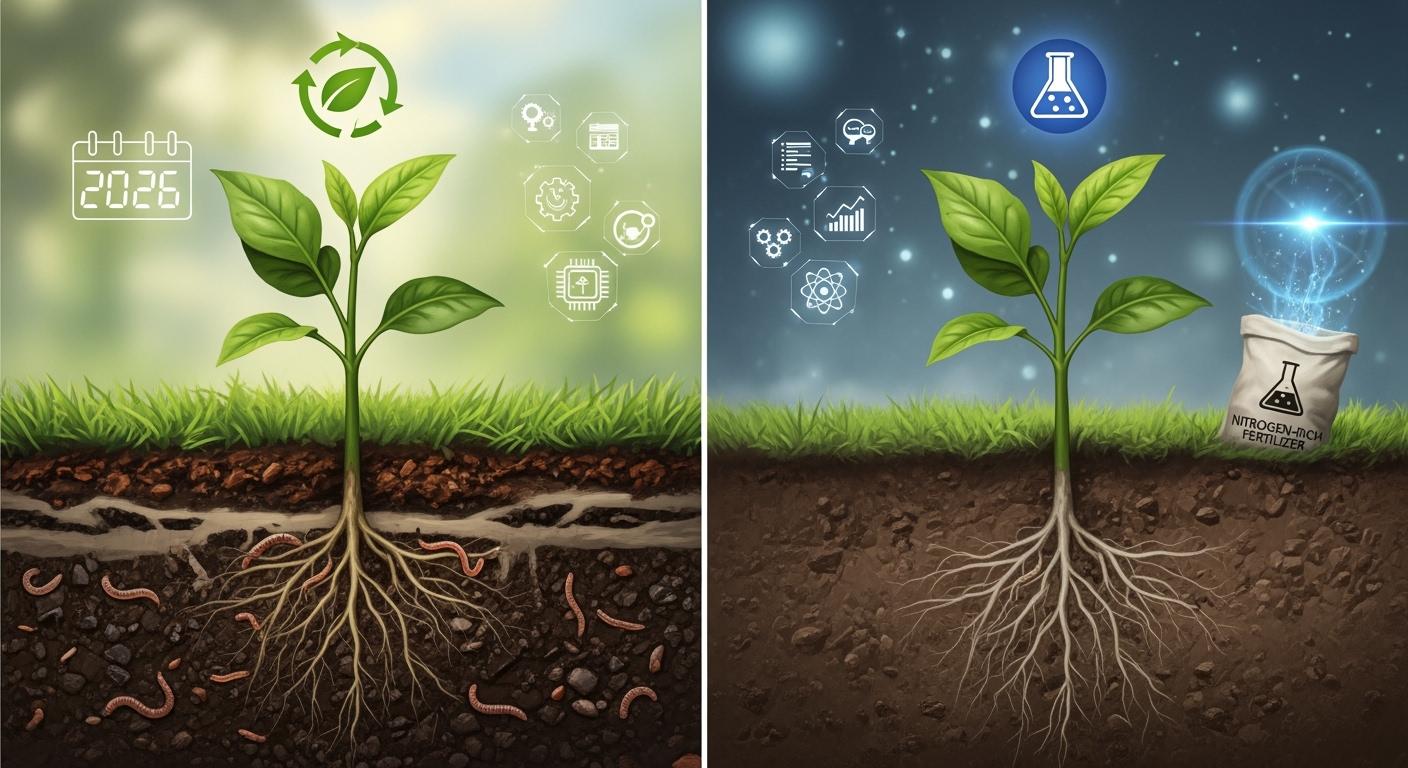
As global agriculture shifts toward sustainability and resilience, the 2026 fertilizer market is witnessing transformative changes—with organic and chemical fertilizers evolving to meet stricter environmental standards, enhance crop performance, and support long-term soil health. Wuxi High Mountain Hi-tech Development Co., Ltd., a leader in specialty agricultural chemicals, is at the forefront of this shift with its Highmountain Amino Acid Organic Fertilizer, a product that embodies the industry’s focus on efficacy, eco-friendliness, and adaptability.
Organic Fertilizers: From Supplement to Core Solution
2026 marks a pivotal year for organic fertilizers, as advancements in formulation and application have elevated them from niche supplements to essential components of modern farming. Unlike traditional organic options, new-generation products such as Highmountain Amino Acid Organic Fertilizer integrate science-backed blends of amino acids, humic acids, and plant-derived organic matter to deliver both immediate and long-term benefits.
Key innovations in organic fertilizers include:
-
Enhanced Nutrient Density: Highmountain’s flagship product boasts a minimum of 45% organic matter, over 5% amino acids (including alanine, glutamic acid, and lysine), and more than 10% humic acids—nutrients that accelerate plant growth, improve nutrient uptake, and strengthen stress resistance. Field trials show that crops treated with this fertilizer yield 15% to 30% more than those using conventional organic alternatives, with notable improvements in taste and quality (e.g., sweeter tomatoes and more robust vegetables).
-
Soil Health Focus: Organic fertilizers now prioritize soil microbiome support and structure improvement. By fostering beneficial microbial activity, Highmountain’s formula enhances soil aeration, water retention, and nutrient cycling—addressing long-standing issues like soil degradation and nutrient leaching associated with over-reliance on chemical inputs.
-
Safety and Sustainability: Made exclusively from plant-based materials, Highmountain Amino Acid Organic Fertilizer is non-toxic, free of harmful residues, and safe for families, pets, and the environment. Its production process adheres to green manufacturing principles, reducing carbon emissions and minimizing ecological impact.
Farmers worldwide are validating these benefits. David Smith, a tomato grower in California, reported a 30% increase in yield and sweeter fruit after switching to Highmountain’s fertilizer, noting, “My soil stayed healthy all season, and I didn’t have to worry about chemical runoff. It’s a game-changer for sustainable farming.” Similarly, European and African growers have observed faster plant growth, improved drought resistance, and richer soil structure—outcomes that align with the global push for climate-smart agriculture.
Chemical Fertilizers: Innovations for Efficiency and Environmental Safety
While organic fertilizers gain traction, chemical fertilizers are not being left behind. 2026 has seen significant advancements in chemical fertilizer technology, focused on reducing waste, lowering environmental impact, and aligning with regulatory demands.
Key developments include:
-
Controlled-Release Technology: Over 60% of new chemical fertilizers now feature specialized coatings or compounds that release nutrients gradually, matching plant growth cycles. This innovation reduces nutrient loss by up to 40% (especially for nitrogen, which is prone to leaching), minimizes groundwater pollution, and ensures consistent crop nutrition.
-
Eco-Friendly Formulations: Manufacturers are introducing stabilized nitrogen compounds to reduce greenhouse gas emissions, green ammonia blends to cut fossil fuel use, and zero-residue formulas that meet strict global safety standards. Fortified micro-nutrient blends are also gaining popularity, addressing specific soil and crop deficiencies without excess chemical load.
-
Regulatory Compliance: Stricter regulations in 2026—including transparent labeling, extended producer responsibility (EPR) policies, and full-life-cycle tracking—are driving chemical fertilizer producers to adopt more sustainable practices. The Asia-Pacific region, in particular, has implemented rigorous standards to limit environmental harm and protect soil health.
The Optimal Approach: Integrated Nutrient Management
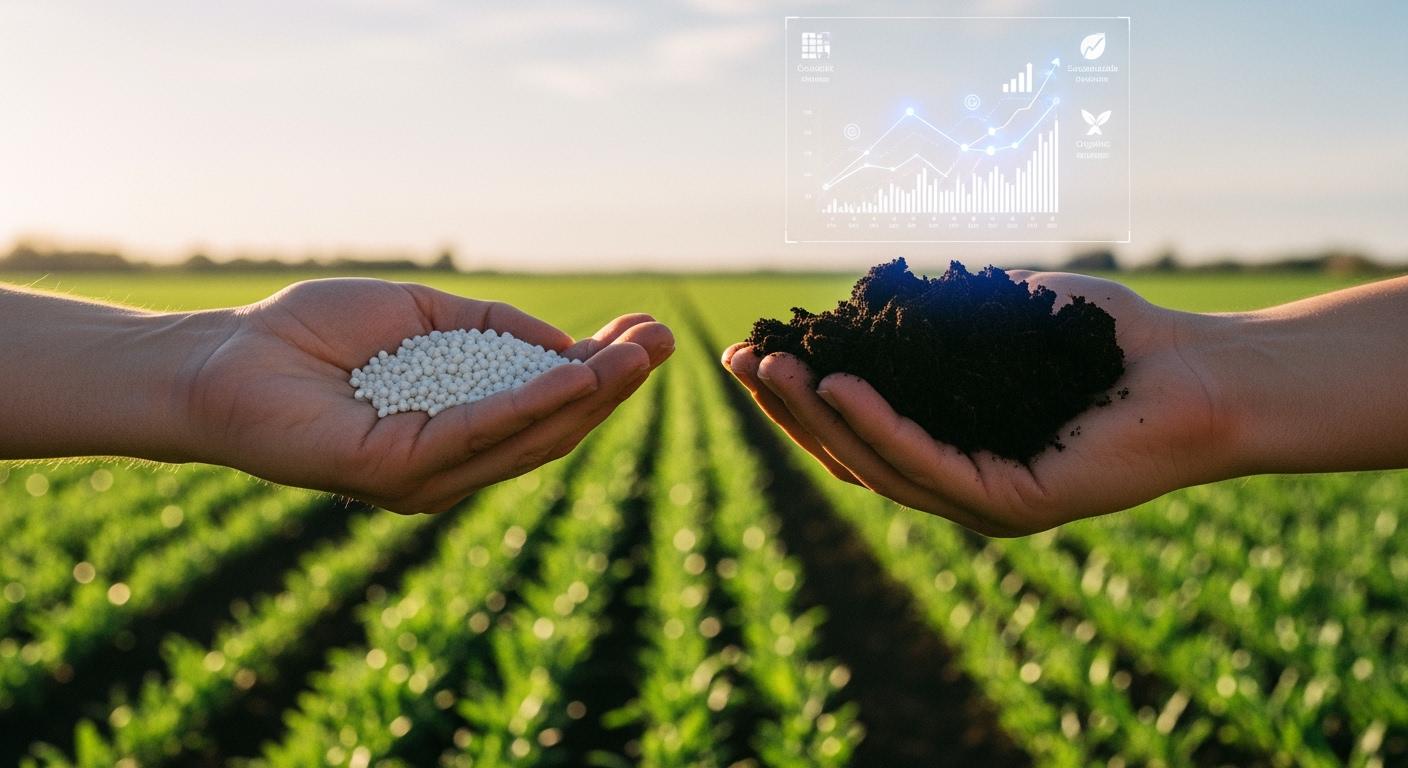
Industry experts and farmers increasingly recognize that the future of fertilization lies in integration—combining the strengths of organic and chemical fertilizers to maximize yields while preserving soil and environmental health. This “Integrated Nutrient Management” (INM) approach leverages:
-
Organic fertilizers (like Highmountain’s) to build soil health, support microbes, and provide slow-release nutrients.
-
Advanced chemical fertilizers for targeted, quick nutrient boosts, especially during critical growth stages.
Practices such as mixing compost with slow-release chemical fertilizers, pairing manure with water-soluble nutrients, and using organic mulch with coated chemical products have proven to enhance crop resilience, reduce waste, and maintain soil fertility over time. Precision agriculture tools—including GPS-guided application, real-time soil sensors, and variable-rate technology (VRT)—further optimize this integration, ensuring that nutrients are applied in the right amount, at the right time, and in the right place.
Highmountain’s Role in Shaping 2026’s Fertilizer Landscape
As the industry evolves, Wuxi High Mountain’s Highmountain Amino Acid Organic Fertilizer stands out as a model of what modern fertilizers can achieve: effective, sustainable, and tailored to the needs of today’s farmers. The product’s flexibility—working both independently and in combination with chemical fertilizers—aligns with the industry’s shift toward customized nutrient solutions.
Beyond product innovation, Wuxi High Mountain is committed to advancing sustainable agriculture through research and education. The company’s focus on plant-based, non-toxic formulations reflects its dedication to environmental stewardship, while its support for precision application methods helps farmers maximize efficiency and minimize waste.
Looking Ahead: Trends Defining the Future of Fertilizers
The 2026 fertilizer market is shaped by six key trends that will continue to drive innovation:
-
Specialization and Customization: Farmers increasingly demand fertilizers tailored to specific crops, soil types, and climate conditions.
-
Digitalization and AI: Technology-driven nutrient management—including AI-powered soil analysis and automated application—will become more accessible.
-
Eco-Friendly Prioritization: Bio-based, low-carbon, and zero-residue products will dominate growth.
-
Controlled-Release and Stabilized Formulations: Both organic and chemical fertilizers will focus on targeted nutrient delivery.
-
Circular Economy Practices: Manufacturers will adopt closed-loop production to reduce waste and reuse resources.
-
Precision Agriculture Integration: Tools for data-driven fertilization will become standard in commercial and small-scale farming.
As these trends unfold, Highmountain Amino Acid Organic Fertilizer remains a cornerstone of sustainable nutrient management—proving that agricultural productivity and environmental responsibility can go hand in hand. For farmers and growers seeking to thrive in 2026 and beyond, the choice is clear: embrace innovative, balanced fertilization practices that nourish crops, protect soil, and support a more sustainable future.
Wuxi High Mountain Hi-tech Development Co., Ltd. continues to invest in R&D to expand its organic fertilizer portfolio, ensuring that its products remain at the cutting edge of industry advancements. For more information on Highmountain Amino Acid Organic Fertilizer and other sustainable agricultural solutions, visit the company’s official website.

.png)








.png)




.png)

.png)